

Imagine a coffee experience so deeply woven into culture that it’s recognized by UNESCO. That’s Turkish coffee; not just a drink, but a ritual, a symbol of hospitality, and a brewing method stretching back centuries. It’s a coffee that demands patience, rewards with intense flavor, and often sparks conversation, long after the last sip.
Forget your fancy espresso setups for a moment. Preparing authentic Turkish coffee is a unique, almost meditative process. It’s about embracing tradition and understanding how simple elements – ultra-finely ground coffee, water, gentle heat, and maybe a touch of sugar – create something truly special.
This guide is your invitation to explore this ancient brewing method. We’ll check its rich history, walk you through the authentic preparation step-by-step, and help you understand why Turkish coffee holds such a revered place in cultural heritage. Let’s brew a connection to the past, one tiny cup at a time.
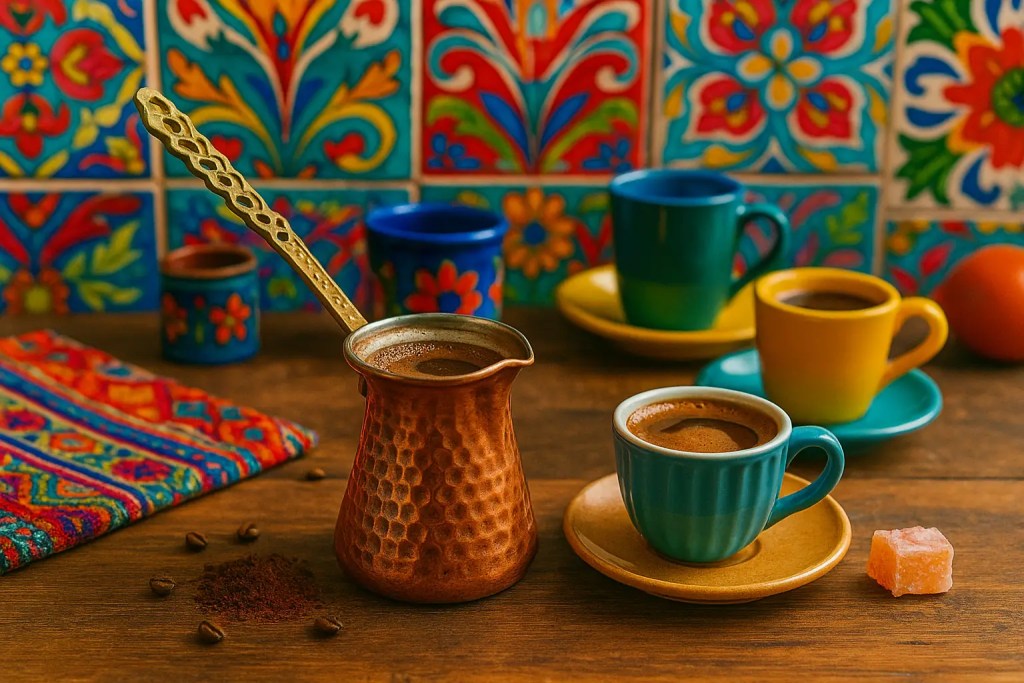
Copper cezve is traditionally used in many Turkish kitchens
What Makes Turkish Coffee Unique?
First things first: Turkish coffee isn’t a specific type of bean. It refers entirely to the method of preparation. Several key elements set it apart:
- Ultra-Fine Grind: The coffee beans are ground to a powder finer than espresso – almost like cocoa powder. This allows for maximum extraction without filtration.
- Unfiltered Brewing: The coffee is brewed directly in water, and the grounds remain in the final cup (settling at the bottom).
- The Cezve (or Ibrik): It’s brewed in a special small pot with a long handle, designed for slow heating and easy pouring.
- The Foam (Köpük): Achieving a thick, rich layer of foam on top is crucial and considered a sign of a well-prepared cup.
- Sugar Added During Brewing: If desired, sugar is added to the pot before brewing, not stirred in afterward.
Its cultural significance is so profound that “Turkish coffee culture and tradition” was inscribed on the UNESCO Representative List of the Intangible Cultural Heritage of Humanity in 2013. This highlights its importance beyond just being a beverage.
A Rich History & Tradition
The story of Turkish coffee is intertwined with the history of the Ottoman Empire. Believed to have been introduced to Istanbul in the mid-16th century, coffee quickly captivated the populace.
Specialized coffeehouses, known as kıraathane (literally “reading houses”), sprang up, becoming vital centers for socializing, discussing politics, sharing news, and enjoying entertainment. Coffee brewing and serving became an art form.
Even today, coffee plays a central role in Turkish hospitality. Offering coffee to a guest is a fundamental gesture of welcome and friendship. A famous Turkish proverb says, “Bir kahvenin kırk yıl hatırı vardır” – meaning, “A single cup of coffee guarantees forty years of friendship (or memory).” It underscores the deep social connections forged over this humble brew.
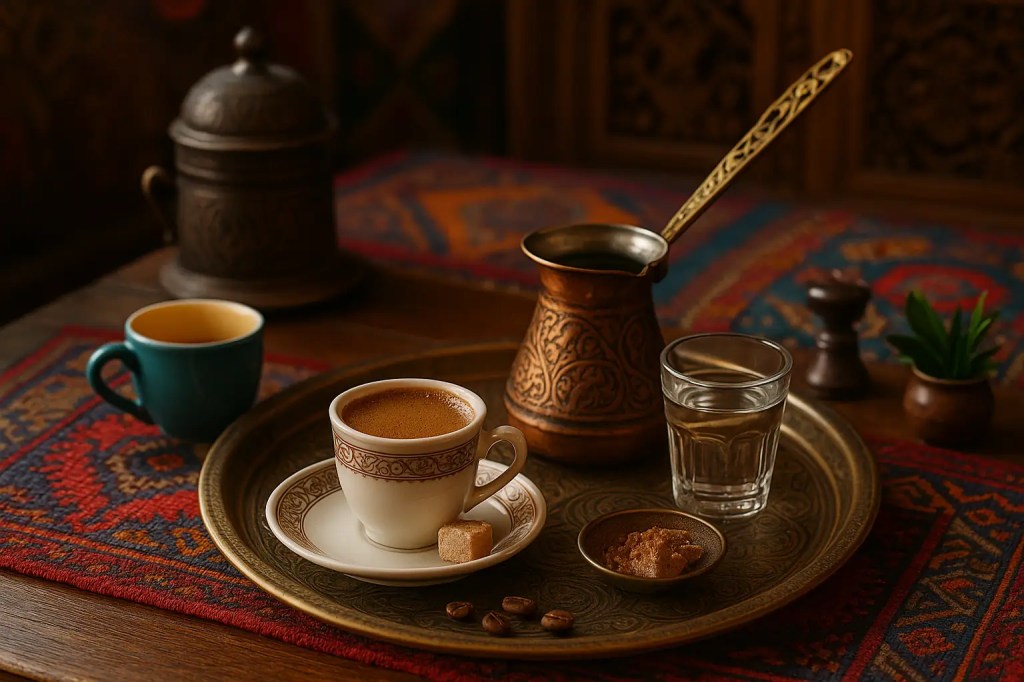
Traditional coffee was served in an ornate cup with cezve and sweets on a brass tray in Ottoman
What You’ll Need: The Turkish Coffee Toolkit
Making authentic Turkish coffee requires a few specific items:
- Cezve (pronounced Jez-VEY) / Ibrik: This is the traditional pot. They come in various sizes (usually measured by how many small cups they make) and materials (copper is classic and conducts heat well, but stainless steel and brass are also common). Choose a size appropriate for the number of servings you intend to make (making one cup in a four-cup cezve can make foam difficult).
- Ultra-Finely Ground Coffee: This is non-negotiable. You need coffee ground to a powder. Standard grinders typically can’t achieve this. Your best bet is to buy pre-ground Turkish coffee from reputable Turkish brands (like Kurukahveci Mehmet Efendi) or specialty shops, or invest in a dedicated Turkish coffee hand grinder. Traditionally, light to medium roast Arabica beans are used.
- Good Quality Water: Use cold, preferably filtered, water for the best taste.
- Sugar (Optional): Granulated sugar works fine. See below for adding it correctly.
- Heat Source: A gas stovetop on the lowest setting works well. Electric stovetops can be used, but maintaining very low, even heat is crucial. Traditionally, it was brewed over hot sand or embers.
- Turkish Coffee Cups (Fincan): Small, demitasse-style cups without handles are traditional.
How to Make Authentic Turkish Coffee: Step-by-Step
Patience is the secret ingredient here. Rushing the process will ruin the foam and the flavor.
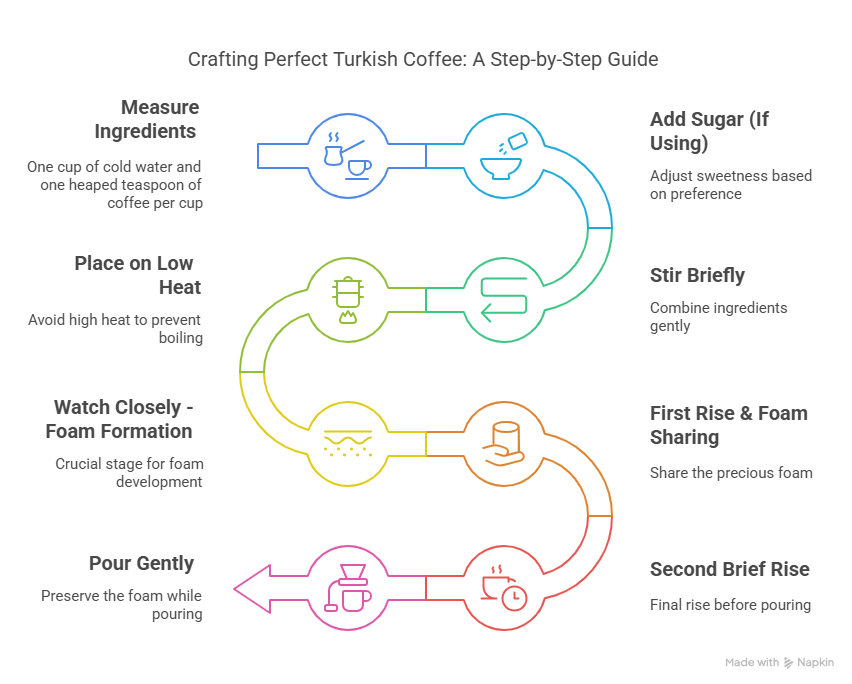
- Measure Ingredients: Use your serving cup to measure one cup of cold water per person and pour it into the cezve. Add one heaped teaspoon of ultra-fine coffee per cup.
- Add Sugar (If Using): This is the only time you add sugar. Add it directly to the cold water and coffee in the cezve based on preference:
- Sade (SAH-deh): Plain (no sugar)
- Az Şekerli (AHZ sheh-kehr-LEE): Little sugar (approx. ½ tsp per cup)
- Orta (OR-tah): Medium sugar (approx. 1 tsp per cup)
- Şekerli (Sheh-kehr-LEE): Sweet (approx. 2 tsp per cup)
- Stir Briefly: Stir the mixture gently with a small spoon just until combined. Do not stir again after this point, as it will disturb the foam formation.
- Place on Low Heat: Put the cezve on the lowest possible heat setting. Avoid high heat at all costs – it will boil too quickly and prevent foam development.
- Watch Closely – Foam Formation: This is the crucial stage. Don’t walk away! As the coffee heats slowly (this might take 5-10 minutes depending on heat), a dark ring of foam (köpük) will start to form around the edges and build towards the center.
- First Rise & Foam Sharing: As the foam thickens and begins to rise up the neck of the cezve, just before it reaches the boiling point, lift the cezve off the heat. Use a teaspoon to carefully spoon some of this precious foam into each serving cup. This ensures everyone gets a share of the best part.
- Second Brief Rise: Return the cezve to the low heat. Let the coffee rise briefly one more time (just a few seconds – watch carefully so it doesn’t actually boil over). Immediately remove it from the heat.
- Pour Gently: Slowly and carefully pour the remaining coffee into the cups, aiming down the side of the cup to avoid disturbing the foam you already placed there. Fill the cups almost to the brim.
Serving & Savoring the Tradition
Authentic service enhances the experience:
- Serve Immediately: Turkish coffee is served piping hot.
- Accompany with Water: Always serve with a small glass of cold water. The water is meant to be sipped before the coffee to cleanse the palate.
- Sweet Treat (Optional): Often served with a piece of Turkish Delight (Lokum) or another small sweet.
- Let it Settle! Advise your guests (or remind yourself) to wait about a minute before taking the first sip. This allows the ultra-fine grounds to settle at the bottom of the cup.
- Sip Slowly: Turkish coffee is meant to be sipped slowly and savored, enjoying the rich flavor and the company. Do not drink the thick layer of grounds at the bottom!
Beyond the Brew: Coffee Fortune Telling
A unique and fun aspect of Turkish coffee culture is fal – fortune telling using the leftover coffee grounds. After finishing the coffee (leaving the sludge), the cup is often swirled, turned upside down onto the saucer, and left to cool. Patterns formed by the grounds are then interpreted, usually in a lighthearted way among friends. It’s a social tradition rather than a serious divination practice for most.

“Patterns formed by the grounds are then interpreted, usually in a lighthearted way among friends.”
Why Your Turkish Coffee Might Go Wrong (Troubleshooting)
- No Foam? Heat was likely too high, you stirred it after the initial mix, or the coffee wasn’t ground finely enough. Slow, low heat is essential.
- Boiled Over? Heat was too high, or you weren’t watching closely enough during the final rise.
- Gritty Taste? You didn’t let the grounds settle sufficiently before drinking, or the grind wasn’t truly powder-fine.
Conclusion: More Than Just a Drink
Making and drinking Turkish coffee is an immersion in history and hospitality. It’s a deliberate slowing down, a focus on process, and a connection to centuries of tradition. The result is an intensely flavorful, unique coffee experience that’s deeply satisfying.
We encourage you to embrace the ritual, source the right ingredients, and share this special brew with friends. It truly is more than just a cup of coffee; it’s a taste of cultural heritage.
 Coffee Guide
Leave a comment