
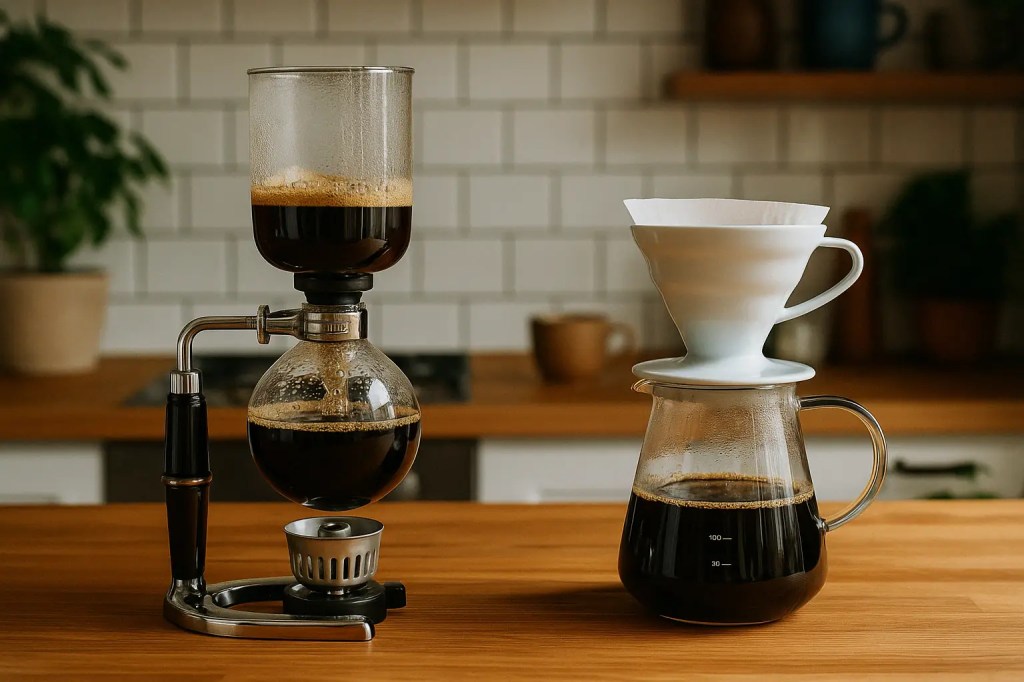
Ready to elevate your home coffee game beyond the automatic drip? Two fascinating manual methods stand out for enthusiasts seeking control and exceptional flavor: the visually stunning Siphon and the ever-popular Pour Over.
Siphon looks like it belongs in a chemistry lab, promising unparalleled clarity through a dramatic process. Pour Over is a seemingly simpler technique beloved by baristas for its ability to highlight nuanced flavors.
Siphon vs. Pour Over: they both deliver fascinating coffee, but in different ways. This guide explores the key differences in process, taste, equipment, and ease of use to help you decide which artistic brewing method aligns with your coffee aspirations.
What is Siphon Coffee? The Vacuum Pot
Siphon coffee, also known as a vacuum pot is as much a performance as a brewing method. It typically consists of two glass chambers stacked vertically, connected by a tube with a filter (often cloth, but paper or metal exist).
It requires an external heat source (like a butane burner or halogen lamp). Heating the lower chamber creates vapor pressure, forcing hot water up into the top chamber to mix with coffee grounds. After brewing, removing the heat creates a vacuum in the lower chamber, dramatically pulling the brewed coffee back down through the filter.
This unique process is renowned for producing coffee with exceptional clarity and cleanliness, often described as tea-like, allowing delicate floral and fruity notes to shine.
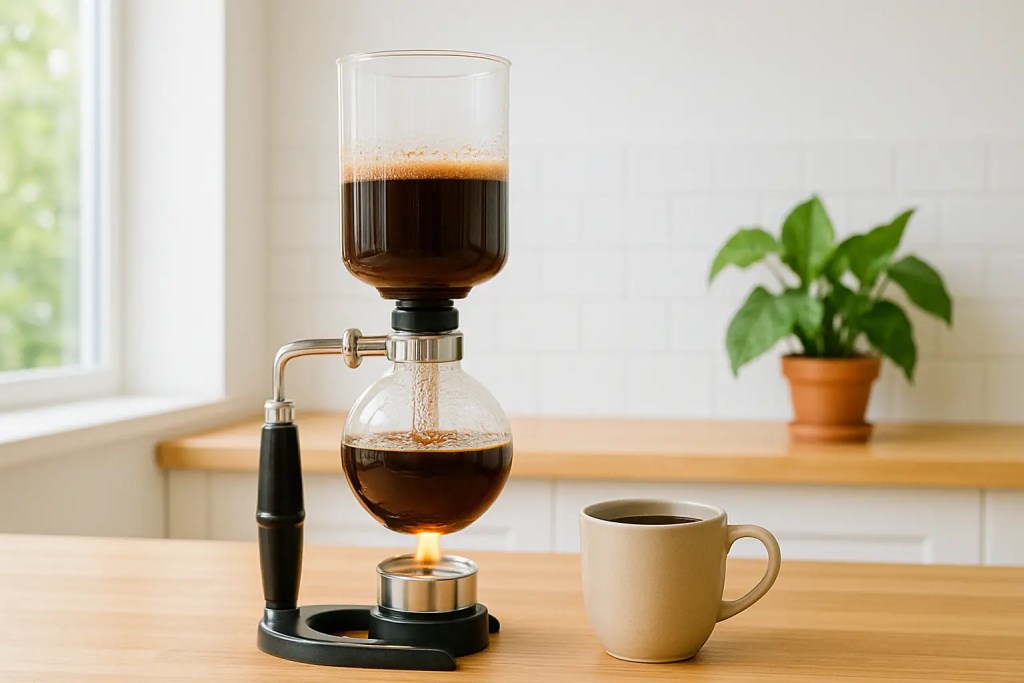
The visually appealing Siphon brewing process
What is Pour Over Coffee? The Controlled Drip
Pour Over is a manual brewing method where you literally pour hot water over coffee grounds held in a filter within a dripper cone (like a Hario V60, Chemex, Kalita Wave, etc.). Gravity does the work, pulling the brewed coffee down into a carafe or mug below.
The beauty of Pour Over lies in the high degree of manual control. The brewer dictates the water temperature, pour speed, pattern, and timing – all significantly impacting the final taste.
While requiring practice to perfect, Pour Over is celebrated for producing a clean, nuanced cup that highlights the specific characteristics of the coffee bean, particularly its acidity and aroma. Paper filters are most common, contributing to the clean profile.
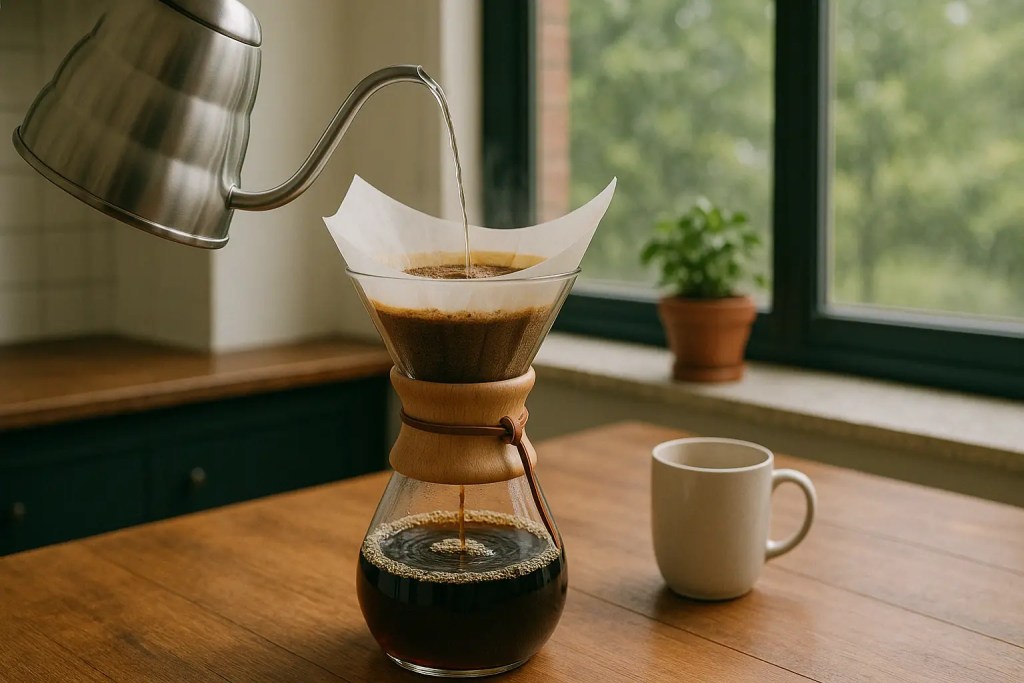
Chemex is a popular Pour Over method
Siphon vs. Pour Over: The Difference
Let’s compare these distinct approaches:
Brewing Method & Physics
The core difference is physics. Siphon uses vapor pressure and vacuum to move water and brew coffee within a closed system. Pour Over relies on gravity and manual water application in an open system. This fundamental difference dictates the equipment, process, and often the result.
The “Wow” Factor & Ritual
The Siphon is pure theater. Watching the water defy gravity, bubble in the top chamber, and then dramatically draw down is captivating. It’s a conversation starter and a ritual for the patient brewer.
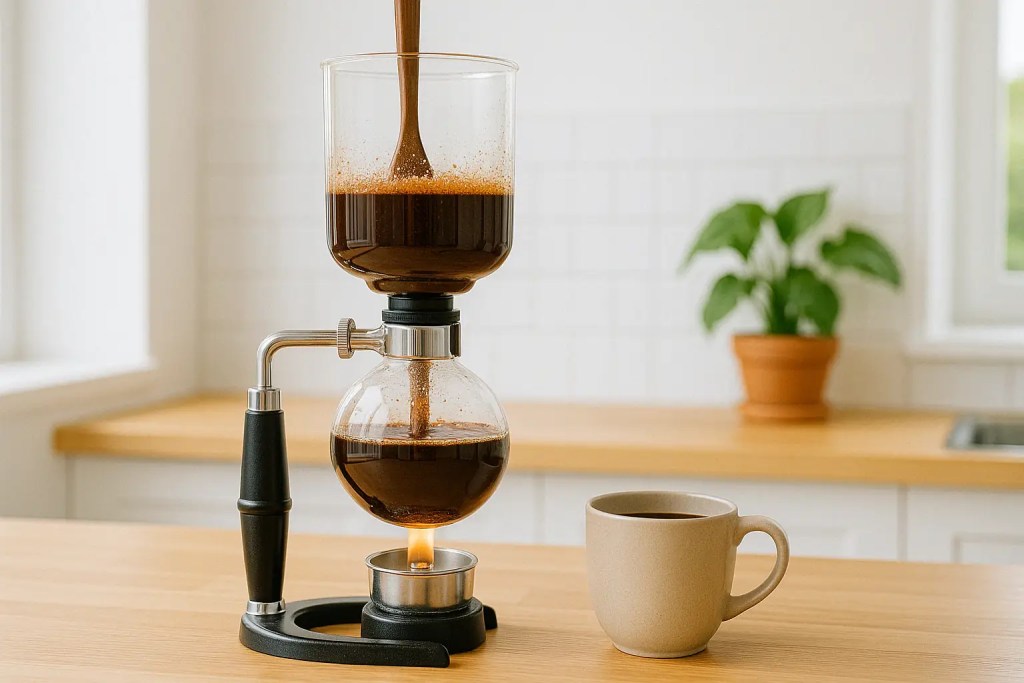
Siphon brewing process attracts a lot attention
Pour Over is a quieter ritual, more focused and meditative. The artistry lies in the precision of the pour and the mindful control exercised by the brewer. While less flashy, perfecting a Pour Over can be deeply satisfying.
Taste Profile: The Quest for Clarity
Both methods are known for clarity, but often differ subtly. Siphon coffee is often described as having ultimate clarity, sometimes almost tea-like in its lack of oils and sediment (especially with cloth filters). This can reveal very delicate notes.
Pour Over also produces a very clean and bright cup (especially with paper filters), effectively highlighting acidity and aromatic complexity. Depending on the specific dripper and filter, it might retain slightly more body than Siphon coffee.
Equipment & Cost
- Siphon: Requires the Siphon brewer itself (often glass, thus fragile) and a dedicated heat source (burner/lamp). Decent setups can start around $60-$100 and go up significantly. Filters are an ongoing, though minor, cost.
- Pour Over: Needs a dripper cone ($15-$50+), filters, and ideally a gooseneck kettle for precise pouring ($30-$100+). Generally more affordable and accessible to start. Equipment is often more durable than glass Siphons.
Control vs. Process
This is nuanced. Pour Over offers immense manual control over variables like pour rate, agitation, and water placement – directly influencing extraction moment-to-moment.
Siphon offers control over heat input and brew time, but once the process starts, the physics of the vacuum pot largely dictates the water movement and saturation. The control feels more indirect compared to Pour Over.
Ease of Use & Cleanup
- Siphon: Can seem intimidating at first. Requires careful setup, managing the heat source, and has more parts to clean carefully, including the filter and chambers. Breakage is a risk.
- Pour Over: Generally considered easier to get started with. The process is straightforward, and cleanup typically involves just tossing the paper filter and rinsing the dripper and carafe.
Brew Time
- Siphon: Usually takes longer overall due to heating the water and the multi-stage process. Expect around 6-10 minutes from start to finish.
- Pour Over: The active brewing part is faster, typically 3-5 minutes, though you might spend time heating water separately.
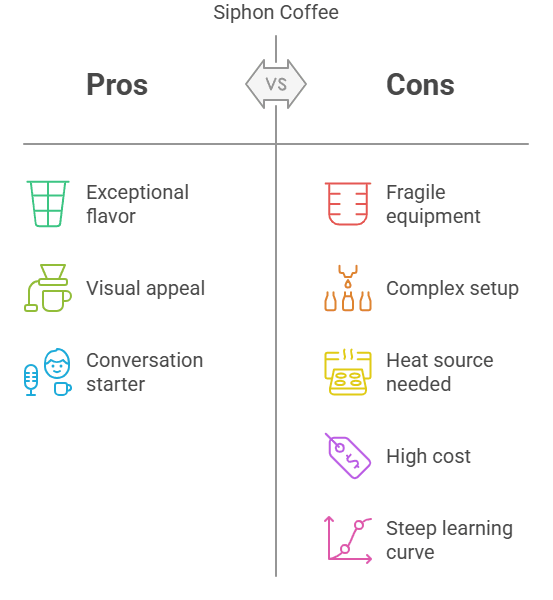
Siphon Coffee: Pros & Cons
- Pros:
- Unparalleled clarity and clean flavor profile.
- Visually stunning and engaging brewing process.
- Excellent conversation starter.
- Can highlight very delicate coffee notes.
- Cons:
- Equipment is often fragile (glass).
- More complex setup and cleanup.
- Requires a dedicated heat source.
- Can be more expensive to get started.
- Steeper initial learning curve.
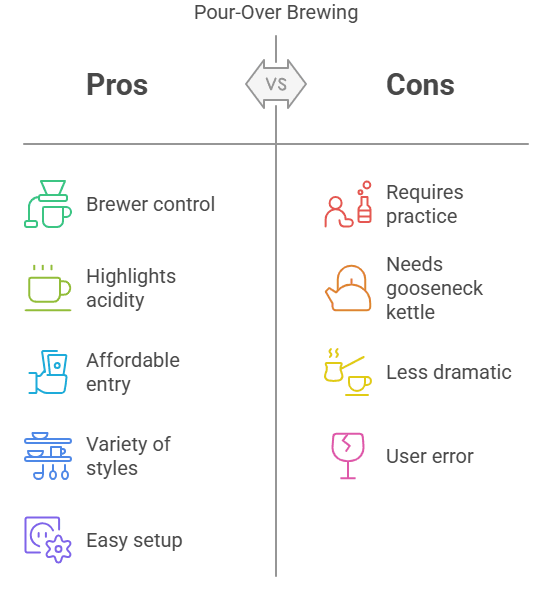
Pour Over Coffee: Pros & Cons
- Pros:
- High degree of brewer control over variables.
- Excellent for highlighting coffee acidity and nuance.
- Relatively affordable entry point.
- Wide variety of drippers and styles available.
- Easier setup and cleanup (especially with paper filters).
- Large supportive community and knowledge base.
- Cons:
- Requires practice and technique for best results (consistency).
- Needs a gooseneck kettle for optimal control.
- Less visually dramatic than Siphon.
- Can be prone to user error affecting the brew.
Who Should Choose Siphon Coffee?
Siphon might be your perfect match if:
- You prioritize absolute clarity above all else.
- You love the process, the science, and the visual spectacle.
- You have the patience for setup, brewing, and cleanup.
- You have the budget for the brewer and heat source.
- You enjoy owning a unique conversation piece.
Who Should Choose Pour Over Coffee?
Pour Over could be your ideal method if:
- You want direct control over brewing variables.
- You enjoy tasting the subtle nuances and acidity in coffee.
- You appreciate a mindful, repeatable ritual.
- You’re looking for an accessible and affordable way into manual brewing.
- You value relatively easy cleanup.
The Verdict: Clarity vs. Control
Choosing between Siphon and Pour Over comes down to what you value most in your coffee experience. Both can produce exceptionally clean and flavorful coffee, far removed from muddy or bitter brews.
Go for Siphon if you’re captivated by the process, the unparalleled clarity, and the visual drama. Go for Pour Over if you seek hands-on control, nuanced flavor exploration, and an accessible, refined ritual. Whichever path you choose, you’re in for a rewarding coffee journey.
 Coffee Guide
Leave a comment