

Choosing your go-to manual coffee brewer? The AeroPress and French Press are top contenders, both loved for delivering great coffee without fuss.
But while they might seem similar as non-electric options, their design, process, and the coffee they produce are quite different. One is a modern marvel of versatility; the other, a timeless classic known for rich flavor.
This guide cuts straight to the chase. We’ll compare the AeroPress and French Press on key factors so you can confidently pick the perfect brewer for your daily cup.
Meet the AeroPress: Fast, Flexible, and Forgiving
Think of the AeroPress as a big syringe designed for coffee. It’s typically made from durable plastic parts: a chamber, a plunger, and a filter cap.
It uses a unique pressure-assisted process. You push hot water through coffee grounds using the plunger, passing the brew through a filter (usually paper). This method is quick, often taking just 1-3 minutes.
The AeroPress shines in its versatility. You can easily tweak grind size, brew time, and even brew style – creating everything from standard coffee to strong espresso-style concentrates or even cold brew.
Its signature result? A remarkably clean, bright cup with virtually no grit. Plus, it’s tough, highly portable, and ridiculously easy to clean.
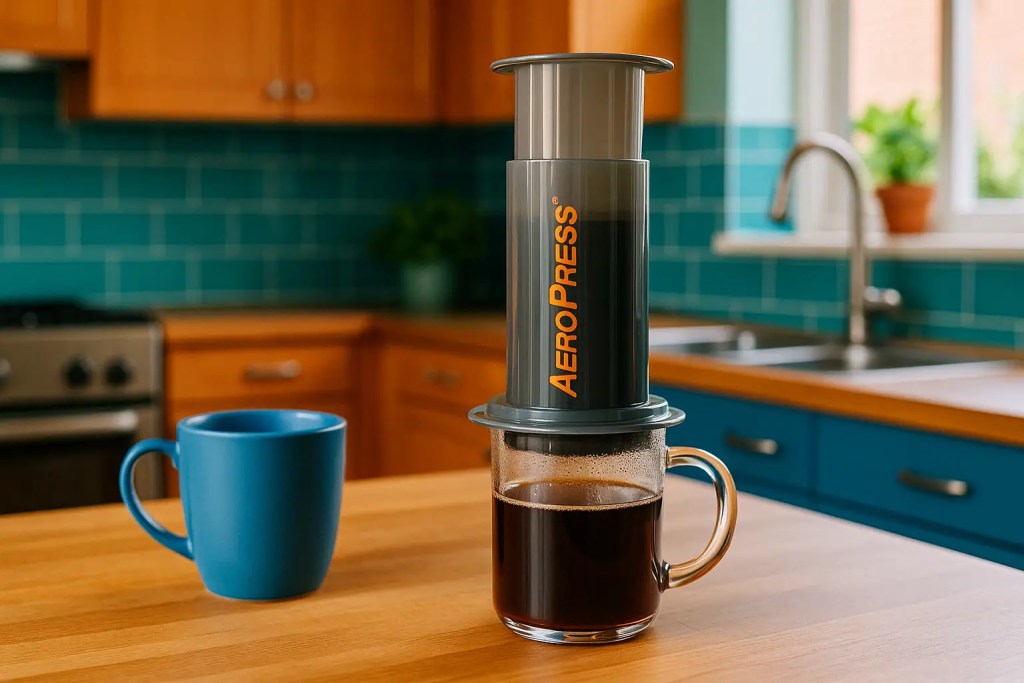
Aeropress. Lightweight, durable, and versatile, this wonderful device is your secret weapon for brewing great coffee virtually anywhere
Meet the French Press: Simple, Classic, and Full-Bodied
The French Press (or cafetière) is the picture of classic coffee making. Its iconic design usually features a glass or stainless steel pot, a lid, and a plunger attached to a built-in metal mesh filter.
It relies purely on simple immersion. You steep coarse coffee grounds directly in hot water for about 4 minutes. Then, you press the plunger down, trapping the grounds at the bottom.
This method allows the coffee’s natural oils and some fine particles into your cup. This is key to its characteristically full-bodied, rich, and textured brew. French Presses often come in larger sizes, perfect for making multiple cups at once.
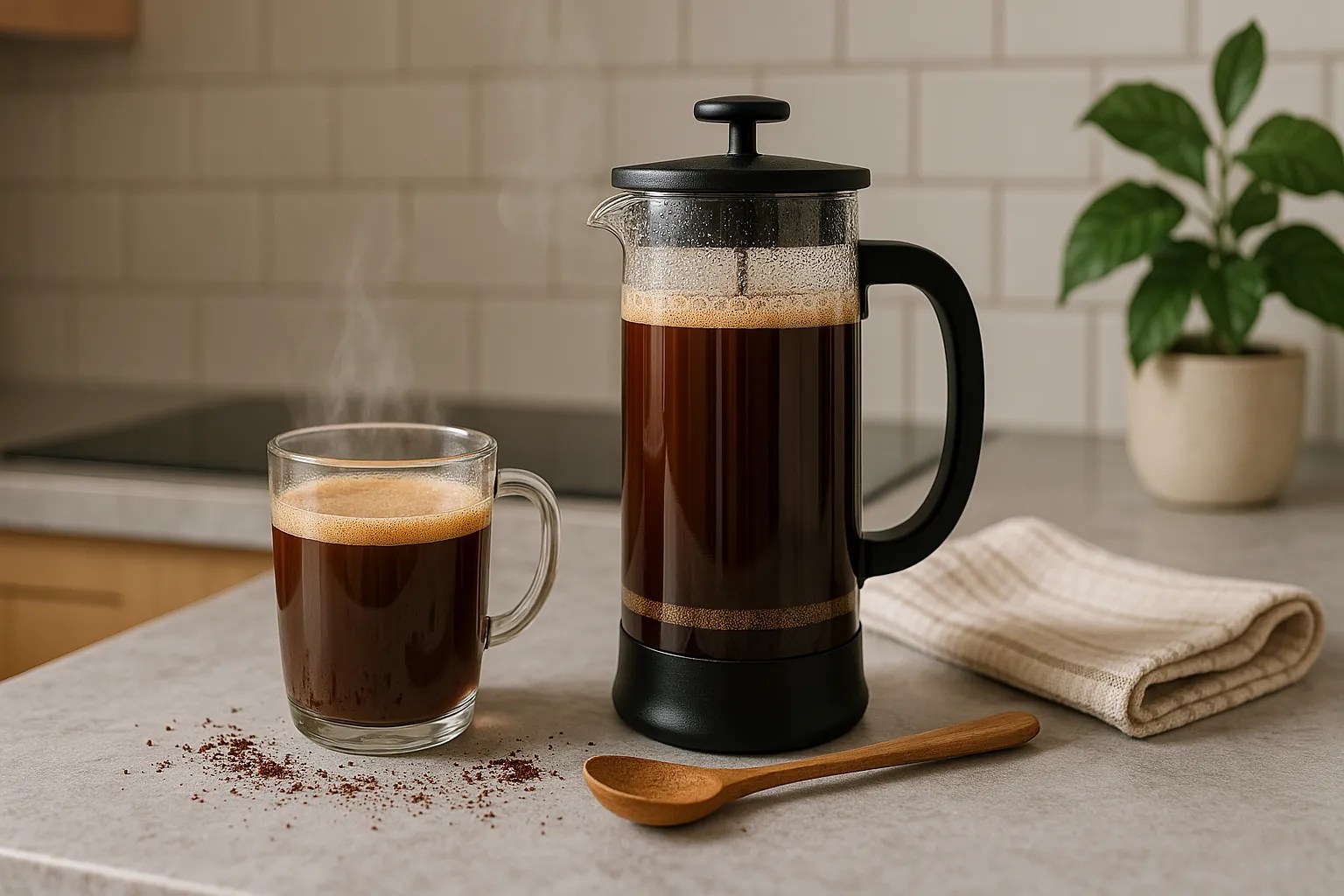
French Press extracts the rich oils and nuanced tastes from your coffee beans like no other
AeroPress vs. French Press: Key Differences
Let’s break down the core distinctions:
Brew Style & Taste Profile
The biggest difference lies here. The AeroPress uses light pressure and typically a paper filter. These filters absorb oils and stop fine grounds, leading to a cleaner, brighter taste that highlights acidity and subtle notes. The body is lighter, with almost zero sediment.
The French Press, conversely, uses full immersion and a metal filter. This lets coffee oils and some fines through. The result is a richer, bolder, heavier-bodied coffee with more texture. However, this method often leaves some sediment at the bottom of the mug.
Grind Size & Versatility
Your grinder setting is crucial. The French Press needs a coarse grind – think chunky sea salt. Using a finer grind leads to sludge and makes plunging difficult.
The AeroPress is far more forgiving. It works well with medium-fine to medium grinds, and even finer settings depending on the recipe.
This flexibility extends to brew types. The AeroPress easily handles hot coffee, cold brew, and strong espresso-like shots. The French Press excels mainly at classic hot brew and can also make cold brew, but offers less experimentation potential.
Build, Portability & Volume
The AeroPress is made of lightweight, durable plastic. It’s nearly indestructible and compact, making it perfect for travel. It typically brews a single serving (around 8-10 oz).
The French Press is often glass (fragile!) or stainless steel (more durable but heavier). It’s generally bulkier and less portable. However, it comes in various sizes, often making 3 to 8+ cups at once – great for groups.
Ease of Use & Cleanup
Both are relatively easy to use. Steep and plunge for the French Press; steep (often shorter) and press for the AeroPress.
Cleanup is where they dramatically differ. The AeroPress wins easily: push out the coffee “puck” into the compost/bin, rinse the parts. It takes seconds.
The French Press requires scooping out messy wet grounds from the carafe and carefully rinsing the mesh filter to remove trapped particles. It’s significantly more involved.
Quick Pros & Cons
Let’s summarize the takeaways concisely:
AeroPress
- Pros: Super clean cup, Fast brew, Highly versatile (hot/cold/espresso-style), Very portable & durable, Incredibly easy cleanup.
- Cons: Usually single serving, Plastic build (for some), Needs filters (ongoing cost unless using metal).
French Press
- Pros: Rich full body & flavor, Brews multiple cups, No paper filter needed, Classic design, Simple brew process.
- Cons: Sediment in cup, Needs coarse grind, Fragile (if glass), Less portable, Messier cleanup.

Which One Is Right For You?
Making the choice simple:
- Choose AeroPress if: You want clean taste, speed, portability, versatility, and effortless cleanup, mostly brewing for yourself.
- Choose French Press if: You love rich, full-bodied coffee, often brew for guests, prefer a classic method, and don’t mind sediment or a bit more cleaning.
Conclusion: Time to Brew
There’s no single winner here – only the right brewer for your preferences. Both the AeroPress and French Press make excellent coffee, far better than basic machines.
Consider what matters most: taste, batch size, portability, and cleanup tolerance. Your perfect brewer is waiting!
 Coffee Guide
Leave a comment