

Ever noticed how the same coffee can taste dramatically different depending on whether you add whole milk at home, grab an oat milk latte from a cafe, or splash in some skim milk at the office? You’re not imagining things! The type of milk you choose absolutely changes how your coffee tastes, especially how “strong” or coffee-forward it seems.
But why? Is one milk truly better at letting that coffee flavour shine through? Let’s simply break down how common milks interact with your beloved brew.
The Science Bit (Made Simple!): Why Milk Changes Coffee
It’s not magic, it’s chemistry! Milk contains three key components that interact with coffee:
- Fats: These add richness and creaminess, creating that smooth mouthfeel many people love. Fat can also coat your tongue, mellowing out coffee’s bitterness and perceived acidity.
- Proteins: These contribute to the body and texture. When heated (like for lattes), proteins help create foam. They can also bind to some bitter compounds (tannins) in coffee, making it taste smoother.
- Sugars: Milk has natural sugars (like lactose in dairy milk, or naturally occurring/added sugars in plant milks). These add sweetness, which can balance coffee’s bitterness.
How these components vary between milk types changes the final taste experience.
Dairy Showdown: Whole vs. Skim
Even within traditional dairy, the fat content makes a big difference.
Whole Milk: Rich & Round
With its higher fat content (usually 3-4%), whole milk brings significant creaminess and body. It excels at smoothing out any sharp edges, bitterness, or strong acidity in coffee, leading to a rounder, fuller taste. This richness beautifully complements medium to dark roasts. While it might slightly mute the most delicate, high-acid notes of very light roasts, its texture makes it a barista favourite.
Skim Milk: Light & Clear
Containing little to no fat, skim milk adds much less creaminess or body. This means more of the coffee’s inherent characteristics – including its acidity and any bitterness – come through more directly. Some might perceive this as the coffee tasting “stronger” or less hidden, while others might find it makes the coffee taste thinner or sharper, especially if the brew isn’t perfectly smooth on its own.

Whole milk (creamier, richer look)
Skimmed milk (lighter texture, more transparent)
Plant Milk Party: Oat, Almond, Soy & Coffee
Non-dairy milks have exploded in popularity, each bringing its own unique profile to the cup.
Oat Milk: The Creamy All-Rounder?
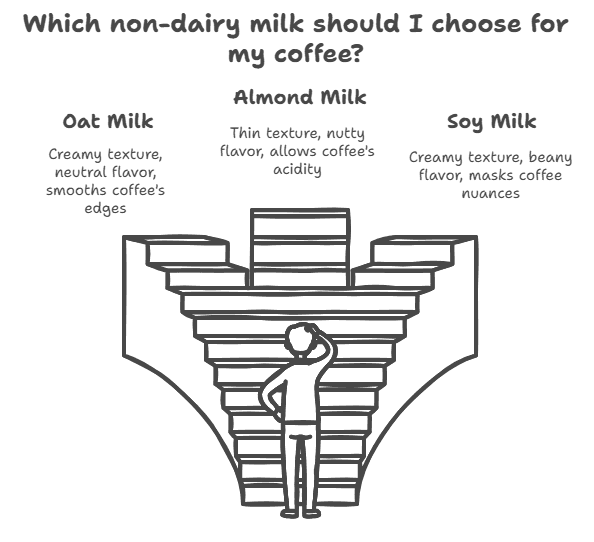
Oat milk, especially “barista blend” versions (which often have added oils), has become incredibly popular for its ability to mimic the creaminess of whole milk. It generally has a relatively neutral, slightly sweet flavour that doesn’t overpower the coffee for most people. It smooths coffee’s edges nicely but perhaps lets more subtle coffee notes through than very high-fat dairy cream might.
Almond Milk: Thin & Nutty
Typically lower in fat and protein than oat or soy milk, almond milk has a thinner, more watery texture. Its distinct nutty flavour is quite noticeable and can sometimes compete with or mask the coffee’s own notes. Because it’s less creamy, it allows more of the coffee’s acidity or sharpness to be perceived, similar to skim milk. Be aware it can sometimes curdle in very hot or acidic coffee.
Soy Milk: Creamy but Beany?
Soy milk offers decent creaminess but possesses a distinct “beany” or “plant-like” flavour that many people find either complements or significantly clashes with coffee. Its unique taste profile can definitely mask some of the coffee’s nuances. Whether this is good or bad is very subjective!
Verdict: Which Milk Makes Coffee Taste “Strongest”?
It really depends on what you mean by “strongest” coffee flavour!
- If “Strongest” = Sharpest / Most Intense / Least Muted: Lower-fat milks like skim milk and thinner plant milks like almond milk generally allow more of the coffee’s inherent acidity, bitterness, and potentially flaws to come through. They dilute less with creaminess. Also check our some of the strongest coffee alternatives with milk!
- If “Strongest” = Fullest Body / Richest: Higher-fat options like whole milk and creamy oat milk smooth out those sharp edges, reducing perceived bitterness and acidity, leading to a richer, rounder feel, even if they slightly soften the absolute intensity.
- Watch out for Flavour Interference: Some plant milks, particularly soy milk and sometimes almond milk, have strong flavours of their own that can compete with or cover up the coffee’s taste, making the coffee itself seem less prominent. Oat milk is often considered the most neutral popular alternative.
Finding Your Perfect Coffee + Milk Match
Ultimately, the “best” milk for your coffee is the one you enjoy the most! Think about whether you want to smooth out your coffee’s rough edges with creaminess or let its brighter, sharper notes shine through. Consider whether you want the milk to be a neutral background player or add its own distinct flavour.
The best way to find out? Experiment! Try brewing your favourite coffee and tasting it side-by-side with small amounts of different milks. You might be surprised by your preference!
What’s your go-to milk for coffee? Do you notice a big difference in how strong your coffee tastes depending on the milk? Share your experiences in the comments!


Leave a comment