
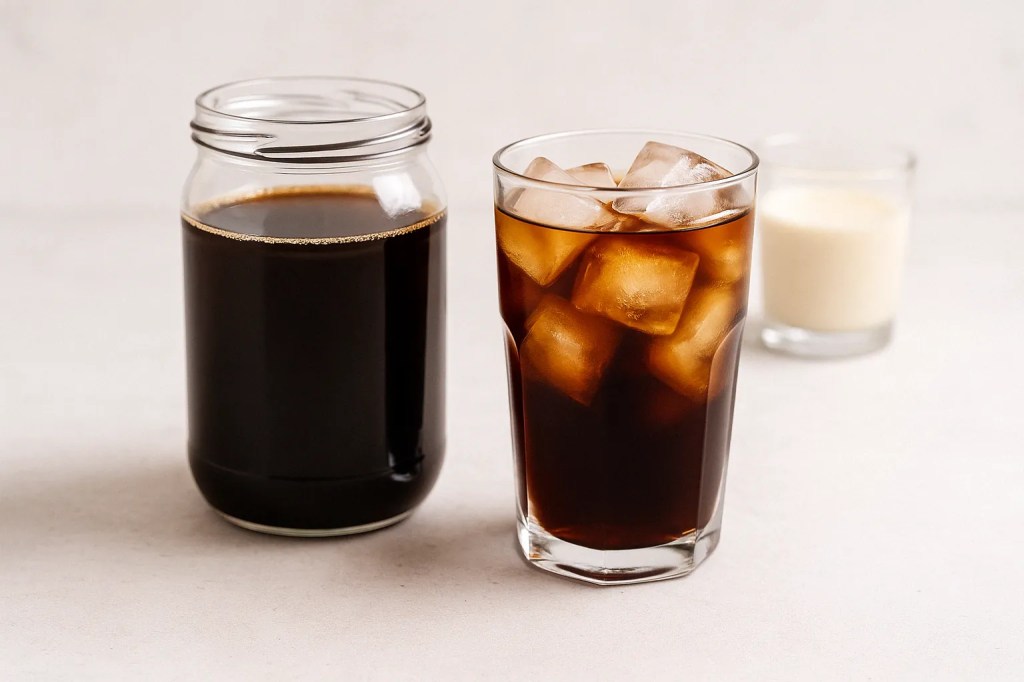
Walk into any coffee shop on a warm day (or check the cold drinks section at the grocery store), and you’ll see options like “Cold Brew” and “Iced Coffee.” They both look pretty similar, right? Just cold coffee, usually served over ice, maybe with some milk. So, are they just different names for the same thing?
Nope! While they might look alike in the cup, cold brew and iced coffee are fundamentally different drinks, made using completely opposite methods. Understanding the difference helps you know what you’re ordering, why they taste distinct, and which one you might prefer to make at home.
Let’s break down the real differences simply.
How They’re Made: Hot vs. Cold Power!
The biggest difference lies right here – how the coffee flavor gets extracted from the beans.
Iced Coffee Explained Simply
This is the one most people are familiar with making quickly. It’s just regular coffee brewed HOT (using a drip machine, pour over, French press – whatever you normally use) that is then cooled down. Sometimes it’s chilled in the fridge, other times it’s poured directly over ice (which can water it down fast!). The key takeaway: Brewed Hot, Served Cold.
Cold Brew Explained Simply
As we learned in our previous posts, cold brew takes a different approach. Coffee grounds are steeped in COLD or room temperature water for a very long time (typically 12-24 hours). Then, the grounds are filtered out. The key takeaway: Brewed Cold, Served Cold.
This difference in brewing temperature and time is everything!

The Taste Test: Why They’re So Different!
Because they’re made so differently, the flavors extracted from the coffee beans are distinct:
Iced Coffee Taste
Hot water is very efficient at pulling out oils and acids from coffee grounds. This gives hot coffee its bright, sometimes sharp or acidic flavors (which can be delicious!). However, when that hot-brewed coffee cools down, those same acids can sometimes taste sour or even more bitter, especially if it wasn’t brewed perfectly or if it gets watered down by melting ice. The final taste really depends on how good the initial hot brew was.
Cold Brew Taste
Cold water works much more slowly and gently. It extracts fewer of those acidic and bitter compounds. This results in a coffee that’s naturally smoother, lower in perceived acidity, often sweeter tasting, and generally less bitter, even when it’s brewed strong. Many people notice more chocolatey or mellow notes.
This is a major reason people seek out cold brew! Because the cold water brewing process extracts significantly less acid than hot brewing, cold brew is much gentler on the stomach. If regular coffee sometimes gives you heartburn or discomfort, you might find cold brew much more agreeable.
What About Acidity & Stomach Friendliness?
This is a major reason people seek out cold brew! Because the cold water brewing process extracts significantly less acid than hot brewing, cold brew is much gentler on the stomach. If regular coffee sometimes gives you heartburn or discomfort, you might find cold brew much more agreeable.
Caffeine Kick: Is One Stronger?
This is a common question, and the answer is… it depends!
Iced Coffee: The caffeine level is determined by how strong the original hot coffee was brewed and how much it gets diluted by ice.
Cold Brew: This gets tricky. Cold brew is often made as a concentrate, which means the liquid before dilution can be very high in caffeine per ounce. However, you must dilute concentrate. Once diluted (say, 1:1 or 1:2 with water/milk), a typical serving of cold brew might have similar or slightly more caffeine than a standard cup of drip coffee, but it really varies based on the specific coffee-to-water ratio used and how much you dilute it. Don’t assume cold brew is always stronger or weaker – especially know that concentrate needs dilution!
So, Which One Should You Choose?
Neither is universally “better” – they offer different experiences! Your choice depends on your taste preferences and needs.
Choose Iced Coffee If…
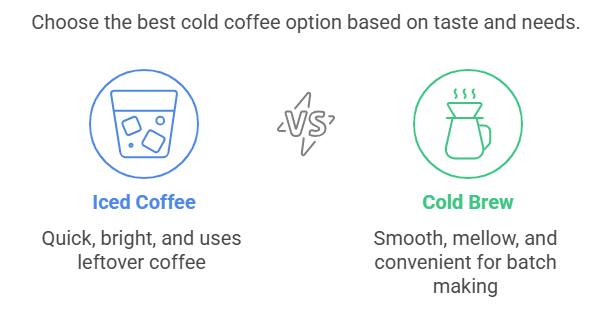
You genuinely enjoy the taste profile of your regular hot coffee, including its brightness or acidity, and simply want it chilled. It’s also your go-to if you need cold coffee quickly without the long waiting time, or if you have leftover hot coffee you don’t want to waste.
Choose Cold Brew Coffee If…
You prioritize a super smooth, mellow coffee flavor with noticeably less bitterness and acidity. It’s an excellent choice if regular coffee sometimes bothers your stomach, if you value the convenience of making a large batch ahead of time, or if you need a strong coffee base for making iced lattes and other recipes (using concentrate). Also you may check our cold brew recipes and tips to flavor your cold brew.
Not Just Names on a Menu!
So, next time you’re ordering or brewing, you’ll know that “Iced Coffee” and “Cold Brew” aren’t interchangeable terms. They represent different brewing journeys that lead to distinct destinations in your cup! The brewing method – hot and fast vs. cold and slow – makes all the difference in taste and acidity.
Why not try brewing a cup of regular hot coffee, letting it cool, and comparing it side-by-side with a glass of homemade cold brew? It’s a fun way to really taste the difference!
Stay tuned for our next post, where we’ll get creative with some easy and delicious recipes using your homemade cold brew!
Which do you usually prefer, Cold Brew or Iced Coffee? Did you know the difference? Share below!
 Coffee Guide
Leave a comment