

Are you tired of that unpleasant bitterness that sometimes ruins your otherwise perfect cup of coffee? You’re not alone! Bitterness is a common coffee complaint, turning a moment of anticipated pleasure into a disappointing sip.
But what if I told you that achieving smooth, delicious, never-bitter coffee at home is easier than you think? Forget complicated techniques – these 5 simple, actionable tips are the secret weapon you need to unlock the naturally sweet and nuanced flavors of your favorite coffee beans. Time to say goodbye to bitter brews forever!
Tip #1: The Golden Ratio of Grind Size
Think of your coffee grounds like tiny puzzle pieces. If they’re too fine, they over-extract; releasing those harsh, bitter compounds. Too coarse, and you end up with weak, sour coffee. Finding the golden ratio of grind size for your chosen brewing method is important.
- For Pour Over & Drip: Aim for a medium-fine grind, similar to coarse sand.
- For French Press: Go coarser, like breadcrumbs.
- For Espresso: A very fine, almost powdery grind is required.
Pro Tip: Invest in a quality grinder. Unlike blade grinders that chop unevenly, quality grinders produce consistent particle sizes, leading to a much more balanced and less bitter extraction. This single upgrade can be your game-changer! We covered this topic in detail in another post of our blog.
Tip #2: Water Temperature – Not Too Hot, Not Too Cold
Water that’s too hot will scorch your coffee grounds, extracting bitter compounds rapidly. Water that’s too cool won’t fully extract the desirable flavors, leading to a sour and underdeveloped brew. The ideal water temperature for brewing coffee is between 195-205°F (90-96°C).
How to achieve it: If your kettle doesn’t have a temperature control, bring it to a boil and then let it sit for about 30 seconds before pouring.
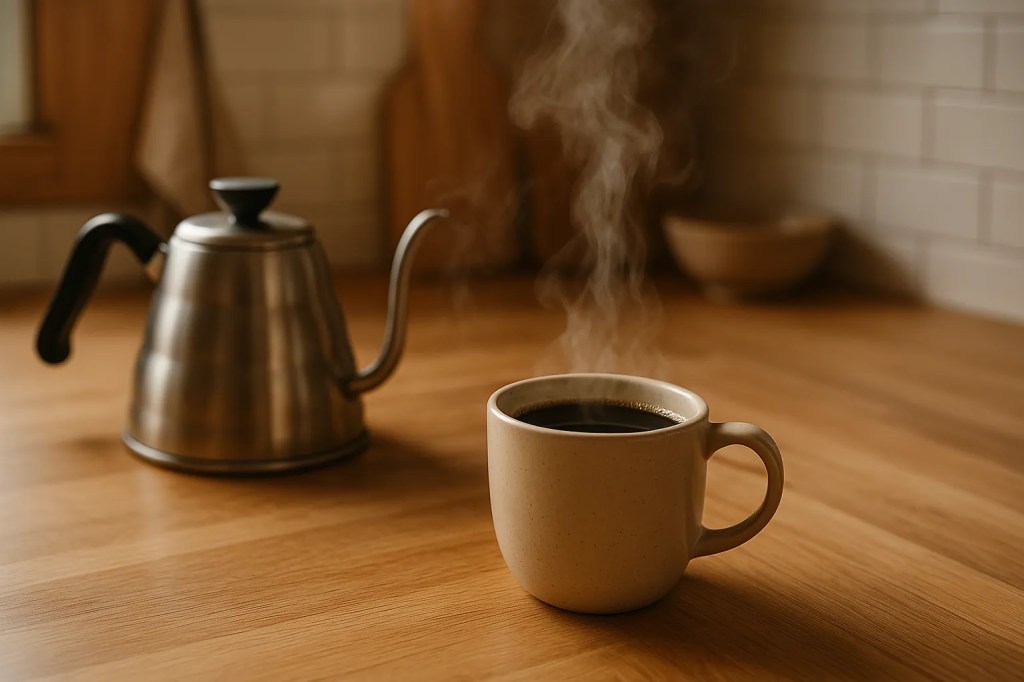
Too hot water can result in bitter coffee
Tip #3: The Brewing Time Sweet Spot
Just like grind size and water temperature, brew time plays an important role in the final taste. Over-brewing is a widely experienced reason behind bitter coffee.
- Pour Over: Aim for a total brew time of 2-3 minutes.
- French Press: Steep for around 4 minutes.
- Drip: Typically takes 3-5 minutes depending on the machine.
Pay attention to your brewing process and adjust the time accordingly. If your coffee consistently tastes bitter, try a slightly shorter brew time.
Tip #4: Water Quality Matters More Than You Think
Your coffee is mostly water, so the quality of your water directly impacts the taste. Hard water with high mineral content can lead to a bitter taste, while tap water can contain chlorine and other impurities that negatively affect the flavor.
Best Water to Use for Coffee?
Use filtered water! A simple water filter pitcher or even bottled spring water can make a significant difference in the clarity and taste of your coffee brew.
Tip #5: Freshness is Your Flavor Friend (and the Enemy of Bitterness)
Coffee beans are at their peak flavor shortly after roasting. As they age, they lose their volatile aromatic compounds and can develop a stale, sometimes bitter taste.
Your action plan:
- Buy whole bean coffee: Grind just before brewing to preserve freshness.
- Store beans properly: In an airtight container, away from light, heat, and moisture.
- Don’t hoard: Buy only as much coffee as you’ll consume within a week or two.
Let’s Make Our Coffee Less Bitter
Say goodbye to bitter disappointment and hello to consistently delicious coffee! By implementing these 5 simple yet powerful tips – focusing on grind size, water temperature, brew time, water quality, and freshness – you’ll unlock the true potential of your coffee beans.
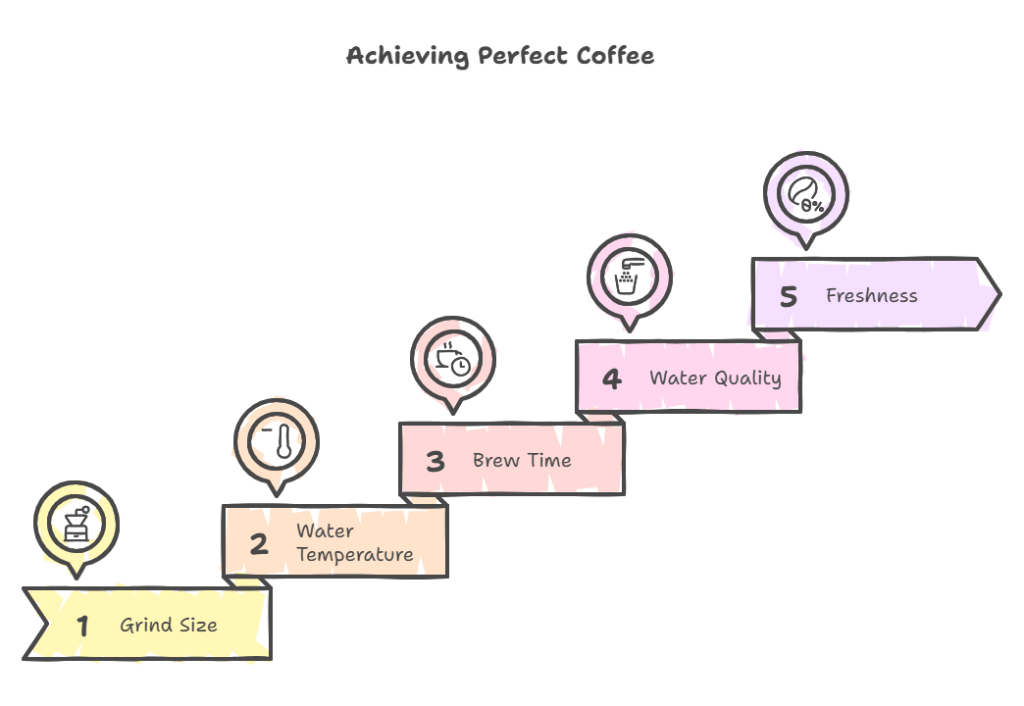
5-step consideration list to prevent bitter coffee
Now, I’d love to hear from you! What’s your biggest struggle with bitter coffee? Have you tried any of these tips before? Share your experiences and other secrets you might have in the comments below! Let’s brew better coffee together!


Leave a comment